
Crawl Space Encapsulation in Laguna Hills, CA
Professional Crawl Space Encapsulation in Laguna Hills, CA in Laguna Hills, CA — Licensed, Insured & Locally Owned
Need crawl space encapsulation in Laguna Hills, CA? Fresh Breeze Attic Insulation offers expert vapor barrier installation, moisture control & free estimates. Call (949) 776-1215.
- Service area
- Laguna Hills, CA & nearby
- Phone
- (949) 776-1215
- Hours
- Mon-Sun 07:00-19:00
- Estimates
- Free, no obligation
Crawl space encapsulation is the process of sealing your home’s crawl space with a heavy-duty vapor barrier, moisture-blocking materials, and insulation to prevent ground moisture, outside air, and biological contaminants from entering your living areas. In Laguna Hills, CA — where coastal marine air from the Pacific pushes inland through Aliso Canyon and seasonal humidity fluctuates significantly — an unprotected crawl space can become a persistent source of moisture damage, mold growth, and energy loss.
Fresh Breeze Attic Insulation brings trusted expertise to homeowners throughout Laguna Hills and greater Orange County. With more than 20 years of hands-on experience serving Southern California homes, our team understands the specific soil conditions, climate patterns, and building styles that make proper crawl space encapsulation essential in this region. Whether you own a single-story ranch home in Moulton Ranch or a hillside residence near Laguna Hills Drive, we deliver lasting protection tailored to your property. Call us today at (949) 776-1215 for a free estimate.

Understanding Crawl Space Encapsulation
A crawl space is a shallow, unfinished area beneath the first floor of a home — typically between 18 inches and 4 feet in height — that provides access to plumbing, electrical wiring, ductwork, and structural components. While these spaces serve important utility functions, they are also among the most vulnerable areas of any home when left unsealed and uninsulated.
Historically, building codes in California and across the country allowed crawl spaces to remain open and vented, operating on the assumption that outside air would naturally carry away moisture. This “ventilated crawl space” approach was standard practice for most homes built before the 1990s, and a large share of Laguna Hills properties — particularly those constructed during the city’s major residential development boom between the late 1960s and 1990s — were built using this now-outdated method.
Read moreShow less
Modern building science research has shown that open-vented crawl spaces actually draw in warm, humid outside air, which then condenses on the cooler surfaces inside the crawl space, creating persistent moisture problems. Encapsulation addresses this by treating the crawl space as a semi-conditioned space — sealed from the outside environment, protected by a reinforced polyethylene vapor barrier (typically 10 to 20 mils thick), and often paired with insulation on the walls and a dehumidifier to maintain controlled humidity levels.
In regions like Laguna Hills, which experience a Mediterranean climate with warm, dry summers and cool, occasionally wet winters, the encapsulation approach is especially beneficial. The nearby Pacific Ocean — just 6 to 8 miles from much of Laguna Hills — contributes to marine layer humidity that regularly penetrates inland during morning and evening hours. Homes built on the canyon-side slopes of Laguna Hills face additional exposure to moisture migration through the soil, making vapor control beneath the subfloor a structural and health priority.
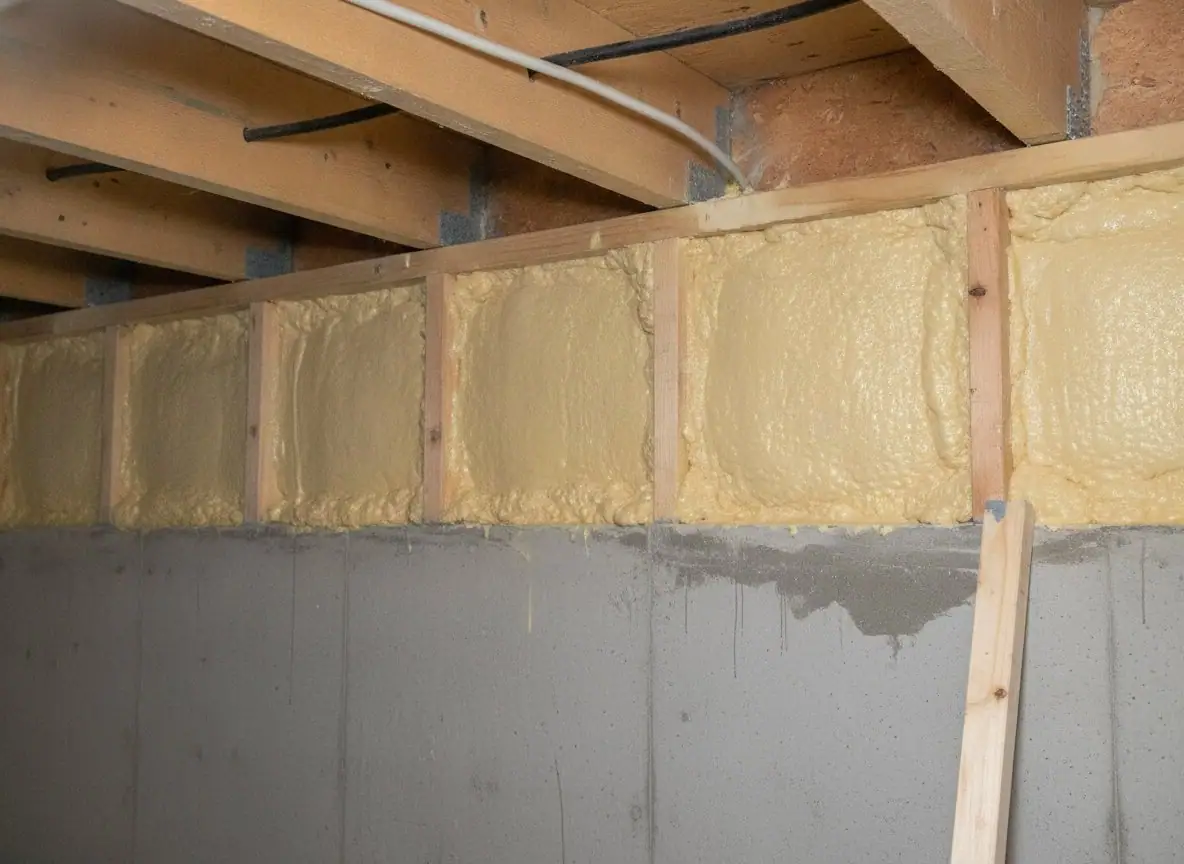
Encapsulation products have advanced considerably over the decades. Today’s systems use reinforced, puncture-resistant liners, drainage matting, and closed-cell spray foam at rim joists to create a fully integrated moisture management system. Learn more about our full range of insulation services in Laguna Hills
Why Crawl Space Encapsulation Is Needed in Laguna Hills, CA
Marine Layer and Coastal Humidity
Laguna Hills sits in the southern portion of Orange County, approximately 6 to 8 miles from the Pacific Ocean coastline at Laguna Beach. The marine layer — a dense coastal fog and low cloud system — regularly pushes inland through the canyon corridors of Aliso Canyon and Laguna Canyon, particularly between May and September during California’s “June Gloom” season. Overnight relative humidity in Laguna Hills commonly reaches 80 to 90 percent during these months. This moisture penetrates unprotected crawl spaces through existing foundation vents, settling on wood framing, subflooring, and insulation — creating the ideal environment for mold, wood rot, and pest activity.
Clay-Heavy Soils and Ground Moisture
Much of Laguna Hills is underlain by expansive clay soils — particularly the Stillwater and Diablo clay series common to the Saddleback Valley region. These soils retain moisture for extended periods following rainfall and slowly release water vapor upward through the ground. During the wet season — which in Laguna Hills typically spans November through March — these clay soils can absorb and hold significant moisture. In January 2023, Orange County experienced rainfall events that deposited over 7 inches in a single week across the Saddleback Valley, saturating soils across hillside neighborhoods including those near Moulton Parkway and El Toro Road. Homes without an effective vapor barrier in the crawl space absorbed measurable ground moisture during and after these events.
Canyon Terrain and Hillside Home Exposure
The topography of Laguna Hills — characterized by rolling hills, canyon ridges, and drainage swales — means that many homes sit on graded pads where subsurface water moves laterally through the soil. Properties along streets such as Paseo de Valencia, Lake Road, and Camino del Avion are particularly susceptible to subsurface moisture migration after rain events. Elevated relative humidity beneath these hillside homes often registers between 70 and 90 percent in unprotected crawl spaces, well above the 50 percent threshold at which mold growth becomes likely.
Aging Housing Stock
A significant portion of Laguna Hills homes were constructed between 1968 and 1990 during the city’s primary development era. Many of these homes feature original fiberglass batt insulation in the crawl space floor joist cavities that has sagged, fallen, or absorbed moisture over decades of use. Original vapor barriers in these homes — if present at all — typically consist of 4-mil or 6-mil polyethylene sheeting that has since torn, shifted, or deteriorated. These aging systems offer minimal protection against today’s recognized standards for moisture control.
Energy Costs and HVAC Efficiency
Southern California Edison serves the majority of Laguna Hills residents, and residential electricity rates in Orange County average between $0.28 and $0.42 per kilowatt-hour depending on usage tier. Moisture and cold air infiltration through an unencapsulated crawl space forces HVAC systems to work harder, increasing energy consumption. Properly encapsulated crawl spaces have been shown to reduce heating and cooling loads by 15 to 25 percent in comparable Southern California homes, translating to meaningful annual savings on utility bills.
Free, no-obligation estimates
Talk to Fresh Breeze Attic Insulation
Tell us what you need and we’ll take it from there.
Signs You Need Crawl Space Encapsulation in Laguna Hills
Moisture and Mold Indicators
- Musty or earthy odors rising through floors, especially after rain or during morning marine layer hours
- Visible mold growth on wood framing, joists, or existing insulation beneath the floor
- Condensation or water stains on HVAC ducts, pipes, or structural wood in the crawl space
- Standing water or muddy soil visible inside the crawl space after winter rainfall events
Structural Warning Signs
- Soft, spongy, or bouncy floors when walking across the first floor
- Warping, cupping, or buckling hardwood floors above the crawl space
- Visible wood rot or dark staining on floor joists or subfloor sheathing
- Rust on metal fasteners, brackets, or HVAC components in the crawl space
Air Quality and Comfort Issues
- Increased allergy symptoms or respiratory irritation among household members
- Floors that feel cold and drafty during Laguna Hills winter nights, when temperatures drop to the mid-40s°F
- Noticeably higher energy bills during both summer cooling season and winter heating months
Pest Activity
- Evidence of rodents, insects, or termites in or around the crawl space area
- Torn or displaced existing vapor barrier material indicating animal intrusion
If you observe two or more of these signs, schedule an inspection promptly. Moisture damage compounds quickly in Laguna Hills’ humid-season conditions. Learn about our rodent proof insulation services
Our process
Our Crawl Space Encapsulation Process in Laguna Hills
At Fresh Breeze Attic Insulation, we follow a comprehensive, multi-step encapsulation process designed specifically for the soil conditions, building styles, and climate patterns found throughout Laguna Hills and the Saddleback Valley.
- 01
Free Inspection and Assessment (Day 1 — 1 to 2 hours)
Our technician performs a full crawl space inspection, measuring humidity levels, assessing existing insulation and vapor barriers, checking for mold, wood rot, pest activity, and standing water. We document all findings with photos and provide a written asses
- 02
Debris and Contamination Removal (Day 1 or 2 — 2 to 4 hours)
We remove all deteriorated insulation, torn vapor barrier material, debris, and any biological contaminants present in the crawl space. In Laguna Hills homes with older fiberglass batts, this step often reveals years of accumulated moisture damage that must be
- 03
Mold Remediation and Wood Treatment (Day 2 — 2 to 6 hours, as needed)
If mold or wood rot is present — common in canyon-adjacent Laguna Hills properties — we apply antimicrobial treatments to affected surfaces and allow adequate drying time. We do not proceed to encapsulation until surfaces are clean, dry, and treated.
- 04
Drainage and Moisture Management (Day 2 to 3 — 2 to 4 hours, as needed)
For properties with persistent drainage issues — particularly hillside homes near Moulton Ranch or canyon edges — we may install a perimeter drainage channel or sump system to manage water intrusion before sealing the space.
- 05
Vapor Barrier Installation (Day 2 to 3 — 3 to 5 hours)
We install a reinforced, 12-mil to 20-mil polyethylene vapor barrier across the entire crawl space floor, extending up foundation walls and securing it with mechanical fasteners and waterproof tape at all seams. We seal around piers, posts, and penetrations to
- 06
Rim Joist and Wall Insulation (Day 3 — 2 to 4 hours)
We seal rim joists and foundation wall framing with closed-cell spray foam insulation (typically 2 to 3 inches, achieving R-12 to R-19), eliminating air and moisture infiltration at the perimeter of the foundation — one of the primary pathways for marine layer
- 07
Ventilation Sealing and Final Inspection (Day 3 — 1 to 2 hours)
We seal or close existing foundation vents to transition the crawl space to a sealed, semi-conditioned environment. If needed, we install a crawl space dehumidifier sized for your space. A final inspection confirms all seams, penetrations, and wall junctions a
Crawl Space Encapsulation Methods and Approaches
Full Encapsulation with Reinforced Vapor Barrier
The most comprehensive approach, involving a 12-mil to 20-mil reinforced polyethylene liner covering the entire crawl space floor and walls. This method is recommended for most Laguna Hills homes with active moisture concerns, clay soil conditions, or proximity to canyon drainage areas. It provides the highest level of moisture and vapor control and is the industry-preferred standard for Southern California coastal climates.
Closed-Cell Spray Foam Rim Joist Sealing
Applied at the perimeter of the foundation where the floor framing meets the foundation wall, closed-cell spray foam creates an airtight, moisture-resistant seal. This method is especially effective in Laguna Hills homes built before 1990, where rim joist areas are frequently the primary entry point for marine layer air and cold-season drafts. It achieves R-values of R-12 to R-19 per application.
Crawl Space Dehumidification Systems
In Laguna Hills homes where ambient humidity consistently exceeds 60 percent during marine layer season, a standalone crawl space dehumidifier — sized to the square footage of the space — is installed to actively regulate moisture levels year-round. These units are particularly effective in homes near Aliso Viejo border areas and canyon-facing properties where passive vapor barriers alone may be insufficient.
Drainage Matting and Interior French Drain Systems
For properties with active water intrusion during rain events — common on the hillside grades of Laguna Hills — we install dimple drainage matting beneath the vapor barrier and, where necessary, a perimeter interior French drain to direct water to a sump pump before it can accumulate beneath the liner.
Partial Encapsulation and Targeted Repairs
For homes with localized moisture issues or limited budgets, we offer partial encapsulation — addressing the most vulnerable zones of the crawl space — as a cost-effective starting point that can be expanded to full encapsulation over time.
Crawl Space Encapsulation Cost in Laguna Hills, CA
The cost of crawl space encapsulation in Laguna Hills, CA varies based on the size of the crawl space, the condition of the existing space, and the scope of work required. Below are general pricing ranges to help you plan your project.
Typical Cost Ranges
- Basic vapor barrier installation only: $1,500 – $3,500 for average-sized Laguna Hills homes (800 to 1,500 square feet of crawl space area)
- Full encapsulation with rim joist sealing: $3,500 – $7,500 for most single-story ranch homes and two-story properties in Laguna Hills
- Full encapsulation with dehumidifier and drainage: $6,000 – $12,000 for larger or more complex properties, including hillside homes with drainage challenges
- Mold remediation (if required): $500 – $3,000 additional, depending on extent of contamination
Read moreShow less
Key Cost Factors in Laguna Hills
- Crawl space height and accessibility: Many Laguna Hills homes have low-clearance crawl spaces of 18 to 24 inches, which increase labor time
- Soil and drainage conditions: Canyon-adjacent properties with clay soils may require additional drainage matting or sump systems
- Condition of existing insulation: Removal and disposal of deteriorated fiberglass batts adds to project cost
- Vapor barrier thickness: 12-mil liner is standard; 20-mil reinforced liner carries a premium of approximately $0.10 – $0.20 per square foot
- Local labor rates: Orange County labor costs are generally 10 to 20 percent above national averages
Fresh Breeze Attic Insulation offers free, no-obligation estimates for all Laguna Hills homeowners. Call (949) 776-1215 to schedule your assessment today.
Laguna Hills Neighborhoods We Serve
Moulton Ranch
Moulton Ranch is one of Laguna Hills’ most established master-planned communities, with a large share of homes built between 1975 and 1990. Properties here frequently feature original vented crawl spaces with aging 4-mil vapor barriers that have degraded over time. The neighborhood’s proximity to Aliso Creek drainage corridors increases subsurface moisture exposure, making full encapsulation particularly valuable for homeowners in this area.
Laguna Hills Drive Corridor
Homes along and near Laguna Hills Drive represent some of the city’s earlier residential development, dating to the late 1960s and early 1970s. These properties often sit on graded hillside pads where lateral soil moisture migration is a documented concern. Many have never had their original crawl space vapor barriers updated.
Paseo de Valencia and South Laguna Hills
The southern stretches of Laguna Hills bordering Aliso Viejo include newer tract developments from the 1990s alongside older custom homes. Canyon-facing lots here experience amplified marine layer exposure, and several streets experience seasonal drainage flow after significant rainfall events.
Surrounding Service Areas
We proudly serve all surrounding communities including Ladera Ranch, Mission Viejo, Lake Forest, Rancho Santa Margarita, Irvine, and Dana Point.
Crawl Space Maintenance Tips for Laguna Hills Homeowners
- Inspect annually after the rainy season: After Laguna Hills’ wet season (November through March), visually inspect your crawl space for standing water, condensation on surfaces, or displaced liner material.
- Monitor indoor humidity levels: Use a hygrometer to verify crawl space humidity stays between 45 and 55 percent. During July and August marine layer peaks, check readings more frequently.
- Clear foundation vent areas of debris: Even in sealed systems, ensure the exterior perimeter of your foundation is clear of soil buildup, mulch, and plant material that can direct surface water toward the foundation.
- Check gutters and downspouts seasonally: Ensure gutters are clear and downspouts direct water at least 4 to 6 feet away from the foundation — critical after the wind-driven rain events common in Laguna Hills from December through February.
- Service your crawl space dehumidifier annually: Clean filters, check drainage lines, and verify operational efficiency before each marine layer season.
- Inspect vapor barrier seams and penetrations: Every two to three years, check that seams remain sealed and that no tears have developed around pipe or post penetrations.
- Address plumbing leaks promptly: Even minor slow drips from crawl space plumbing can compromise a vapor barrier system within weeks in a high-humidity environment.
Why Choose Fresh Breeze Attic Insulation in Laguna Hills
Fresh Breeze Attic Insulation has been serving Laguna Hills and Orange County homeowners for over 20 years, building a reputation for quality workmanship, honest assessments, and results that last. We are not a national franchise — we are a locally rooted team that understands the specific challenges of Laguna Hills homes: the coastal humidity patterns, the clay soil conditions in the Saddleback Valley, the aging housing stock from the city’s 1970s and 1980s development era, and the importance of energy efficiency in a region with some of California’s highest electricity rates.
Our technicians are trained in the latest crawl space encapsulation standards and use only premium-grade materials — reinforced 12-mil to 20-mil vapor barriers, closed-cell spray foam at rim joists, and commercial-grade dehumidification systems — engineered for Southern California conditions. We provide detailed written estimates, transparent pricing with no hidden fees, and clear project timelines before any work begins.
Call us today at (949) 776-1215 or request a free estimate online. We serve all of Laguna Hills and surrounding Orange County communities. Explore our full insulation services
FAQ
Frequently Asked Questions: Crawl Space Encapsulation in Laguna Hills, CA
How much does crawl space encapsulation cost in Laguna Hills, CA?
In Laguna Hills, crawl space encapsulation typically costs between $3,500 and $7,500 for a standard full encapsulation with vapor barrier and rim joist sealing. Homes requiring mold remediation, drainage systems, or dehumidifier installation may see costs range from $6,000 to $12,000. Basic vapor barrier-only installations start around $1,500 to $3,500. Orange County labor rates and site-specific challenges such as low clearance heights and clay soil drainage needs are the primary variables. Contact us at (949) 776-1215 for an accurate, free estimate tailored to your property.
How long does crawl space encapsulation take in Laguna Hills?
Most standard encapsulation projects in Laguna Hills are completed in 1 to 3 days. Projects requiring mold remediation, drainage installation, or debris removal from older homes may extend to 3 to 5 days. We provide a specific timeline in writing before work begins.
Is crawl space encapsulation necessary if my Laguna Hills home doesn’t have visible mold?
Yes. Mold is often not visible in its early stages and may be growing on the underside of the subfloor or deep within insulation. In Laguna Hills, where crawl space humidity regularly exceeds 70 to 80 percent during marine layer season, moisture damage begins accumulating long before visible mold appears. Encapsulation is a proactive investment in your home’s structural integrity and indoor air quality.
Will crawl space encapsulation reduce my energy bills in Laguna Hills?
Yes. Properly encapsulated crawl spaces with sealed rim joists and floor insulation can reduce home heating and cooling loads by 15 to 25 percent. For Laguna Hills homeowners on Southern California Edison’s tiered electricity rates — which can exceed $0.40 per kilowatt-hour at upper tiers — this translates to meaningful annual savings on utility bills.
Do I need a permit for crawl space encapsulation in Laguna Hills?
In most cases, vapor barrier installation and rim joist sealing do not require a building permit in Laguna Hills. However, if significant structural repairs, drainage systems, or alterations to the foundation venting are involved, a permit may be required by the City of Laguna Hills Building and Safety Division. We will advise you on any permit requirements during your free inspection.
Can crawl space encapsulation help with pest control in Laguna Hills?
Yes. A properly sealed crawl space eliminates the moisture conditions that attract rodents, termites, and other pests common to Laguna Hills canyon-area homes. A continuous, reinforced vapor barrier also removes entry pathways and nesting materials. We often combine encapsulation with rodent proof insulation for comprehensive protection.
How long does a crawl space vapor barrier last in Laguna Hills?
A quality 12-mil to 20-mil reinforced polyethylene vapor barrier, properly installed, is rated to last 20 to 25 years or more under normal conditions. In Laguna Hills, where seasonal humidity fluctuations and occasional ground moisture from clay soils place ongoing demands on the liner, we recommend a visual inspection every 2 to 3 years and a comprehensive inspection after any significant flooding event or earthquake activity.
Does Fresh Breeze Attic Insulation serve areas near Laguna Hills?
Yes. In addition to Laguna Hills, we serve Ladera Ranch, Rancho Santa Margarita, Irvine, Santa Ana, Anaheim, Costa Mesa, Dana Point, Fullerton, Garden Grove, Laguna Beach, Laguna Woods, Lake Forest, Mission Viejo, Newport Beach, Orange, San Juan Capistrano, and Tustin. Call (949) 776-1215 to confirm service availability for your address.
Get a Free Crawl Space Encapsulation Estimate in Laguna Hills Today
Don’t let Laguna Hills’ coastal humidity, clay soils, and marine layer moisture silently damage your home’s structure, air quality, and energy efficiency. Fresh Breeze Attic Insulation is ready to provide a thorough, no-obligation inspection and a detailed written estimate — at no cost to you.
Our experienced team serves all Laguna Hills neighborhoods including Moulton Ranch, the Laguna Hills Drive corridor, and south Laguna Hills canyon-area properties. We bring over 20 years of Orange County expertise to every project.
Call us now at (949) 776-1215 or schedule your free estimate online. Protect your home. Improve your comfort. Reduce your energy costs. Fresh Breeze Attic Insulation — Laguna Hills’ trusted crawl space encapsulation specialists.
Get in touch
Find insulation help near you
Request a free estimate online or give us a call — our team will follow up quickly.
- Call us(949) 776-1215
- Visit23151 Moulton Pkwy, Laguna Hills, CA 92653
- HoursMon-Sun 07:00-19:00